


Launceston Who's Who
Public Profile
PUBLIC PROFILE
Eriko Takefuji
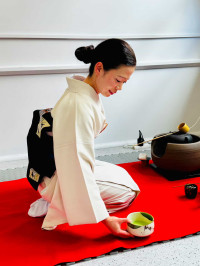
Local ResidentEriko at a Chado Workshop at Mitcham Community Centre in 2025
As a dedicated instructor of the Urasenke school of Japanese tea ceremony (Chado), one of Japan’s oldest and largest tea traditions, I also conducts workshops introducing the art and spirit of Chado to Australian audiences.
Across my work in traditional crafts, landscape design and tea ceremony, I am passionate about sharing the richness of Japanese culture and the essence of Japanese aesthetics with people in Australia.
TAKEFUJI
While the online boutique is the heart of TAKEFUJI, Eriko also participates in Japanese cultural events and markets held in Adelaide, creating opportunities for people to discover and experience the richness of Japanese craftsmanship.
Launched in 2026, TAKEFUJI LAWLER is a landscape design practice that explores how Japanese aesthetics can be expressed within the unique natural environment of Australia. Working alongside her husband Richard, whose background is in architectural design, TAKEFUJI LAWLER aims to create gardens that are not confined to the traditional Japanese garden style, but instead draw on the essence of Japanese aesthetics to create spaces that respond to both people and nature.
Connect through my public pages
Public information provided by this member.
Share this Portrait
Distinguished and Famous people from Launceston
🎵 Peter Sculthorpe
Composer Peter Sculthorpe was born in Launceston in 1929 and attended Launceston Grammar School. He began composing as a boy, reportedly working by torchlight under the bedclothes, before studying in Melbourne and later at Oxford. After returning to Tasmania from his first university studies, he helped run a sporting-goods shop with his brother while continuing to write music. His later works explored Australian landscapes and histories, as well as influences from Asia and the Pacific. Pieces including Irkanda IV and Kakadu helped establish a distinctive voice in Australian concert music. The Launceston beginning is therefore both educational and creative, well before international fellowships and a long university career.
🏅 Ricky Ponting
Ricky Ponting grew up over the back fence from Mowbray Cricket Club, a wonderfully convenient address for a cricket-obsessed child. He made his A-grade debut for Mowbray at fourteen and his Sheffield Shield debut for Tasmania at seventeen. International selection followed in 1995. Born in Launceston, he went on to play 168 Tests and captain Australia through a highly successful period, including two World Cup victories as captain. The local club remained an important part of his public story. Launceston’s connection is unusually complete: birthplace, childhood home and the senior club where a young player first tested himself against adults.
🏏 David Boon
David Boon was born in Launceston and became one of Tasmania’s most recognisable cricketers. A determined right-handed batter, he played in Australia’s 1987 World Cup-winning side and made 75 in the final, earning player-of-the-match honours. His career also included four Ashes series wins and later leadership of Durham in English county cricket. After playing, he moved into selection and match-officiating work. Launceston commemorates the connection through the stand named for him at its major cricket ground. His reputation rests on a long playing and administrative career, rather than the drinking anecdotes that too often crowd out the cricket.
✈️ Hudson Fysh
Wilmot Hudson Fysh, known as Hudson Fysh, was born at Launceston in 1895. Wartime service took him from Gallipoli to the Australian Flying Corps, and aviation became his postwar career. Before helping establish Qantas, he and Paul McGinness surveyed an overland route from Longreach to Darwin in a Model T Ford. The journey took fifty-one days—an effective demonstration of the distances an airline might overcome. Fysh flew for the developing company before concentrating on management, guiding it through expansion and change. His Launceston birthplace connects Tasmania with an enterprise whose earliest practical challenges lay in the vast distances of inland Queensland and the Northern Territory.
🤝 Ernie Briggs
Ernie and Doris Briggs took charge of the Salvation Army’s Red Shield Hostel in Launceston shortly before his accreditation as a military welfare representative in January 1941. The hostel gave servicemen meals, accommodation and support; he also operated a mobile unit visiting training camps. Overseas service later made him well known for entertainment, coffee and generous supplies of chewing gum. The Launceston work shows the everyday foundation beneath the colourful nickname P.K. Kid: a bed for the weekend, a meal and someone willing to help. Doris was a fellow Salvation Army officer and an active partner in that work.
🏛️ Nev Hollinshed
Nev Hollinshed was architect of Launceston’s art deco Princess Theatre project in 1940. Theatre and cinema design were central to his career: he had worked on Melbourne’s Comedy Theatre with Albion Walkley and on Brisbane’s Regent Theatre with Richard Gailey junior. His commissions required attention to the changing worlds of live performance and film, alongside the visual impact of their interiors. He also designed houses and civic buildings and became active in heritage preservation. Launceston’s documented connection is the Princess Theatre, placing the city within the wider career of an architect whose work helped shape Australian entertainment spaces.
